 In Anaheim, price doesn’t always drive results; presentation does, and staging is the unspoken language of value. When buyers scroll through listings, they don’t stop for average—they stop for clarity, flow, and confidence. At Bionki Interiors, we don’t just add furniture, we apply emotional strategy room by room to make buyers feel like the home already belongs to them. If your home is clean but uninspired, or freshly renovated but hard to read, you’re not listing strategically—you’re just listing. These 10 reasons show why smart sellers stage before the listing ever goes live.
1. First Impressions Are Instant, and You Only Get One
Buyers decide how they feel about a home within seconds, often before they reach the kitchen or living room. If the first visual hit feels awkward or undefined, the rest of the walk-through becomes damage control instead of momentum. Strategic staging captures attention immediately and turns it into emotional ownership before logic can interrupt. We place each piece to answer the buyer’s subconscious question, “Do I belong here?” When that answer is yes, the offer follows.
2. Empty Rooms Backfire in Person, No Matter How They Look Online
An empty room might look open on a listing site, but it will feel hollow, echoey, and uncertain in person. Buyers can’t evaluate scale without context, and when they can’t feel how a room works, they assume it doesn’t. Staging isn’t about taking up space; it’s about defining it in a way that builds trust. When each room tells a complete visual story, buyers stop guessing and start nodding. That nod is the beginning of an offer.
3. Most Buyers Don’t Imagine Potential; They React to Certainty
Sellers love to believe buyers will “see through it,” but in reality, most buyers don’t have that skill. They react emotionally to what they see in front of them, not to what might be possible later. When we stage a home, we fill in the emotional gaps with layout, texture, and scale so the buyer doesn’t have to guess. That confidence becomes momentum, and that momentum closes deals. Without staging, you’re asking for imagination instead of providing answers.
4. Online Photos Must Hook, and Staging Is the Bait That Works
The first showing almost always happens online, and if the photos don’t stop someone mid-scroll, the listing dies quietly. Great staging creates photo-ready rooms with clean silhouettes, soft shadows, and scale that makes the home feel lived-in but not lived-through. Buyers should click because something feels clear, not because they’re trying to figure out where the couch might go. We make sure the digital experience starts strong, because if it doesn’t, there may never be a real showing to fix it.
5. Staged Homes Look Pricier Without Being Renovated
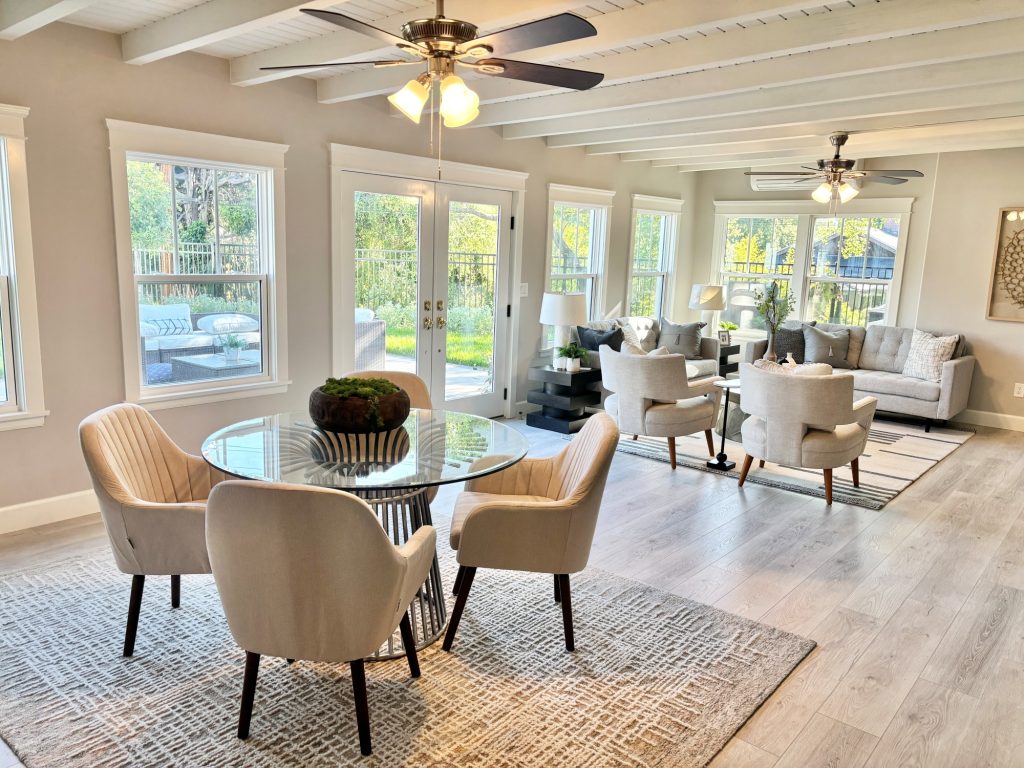
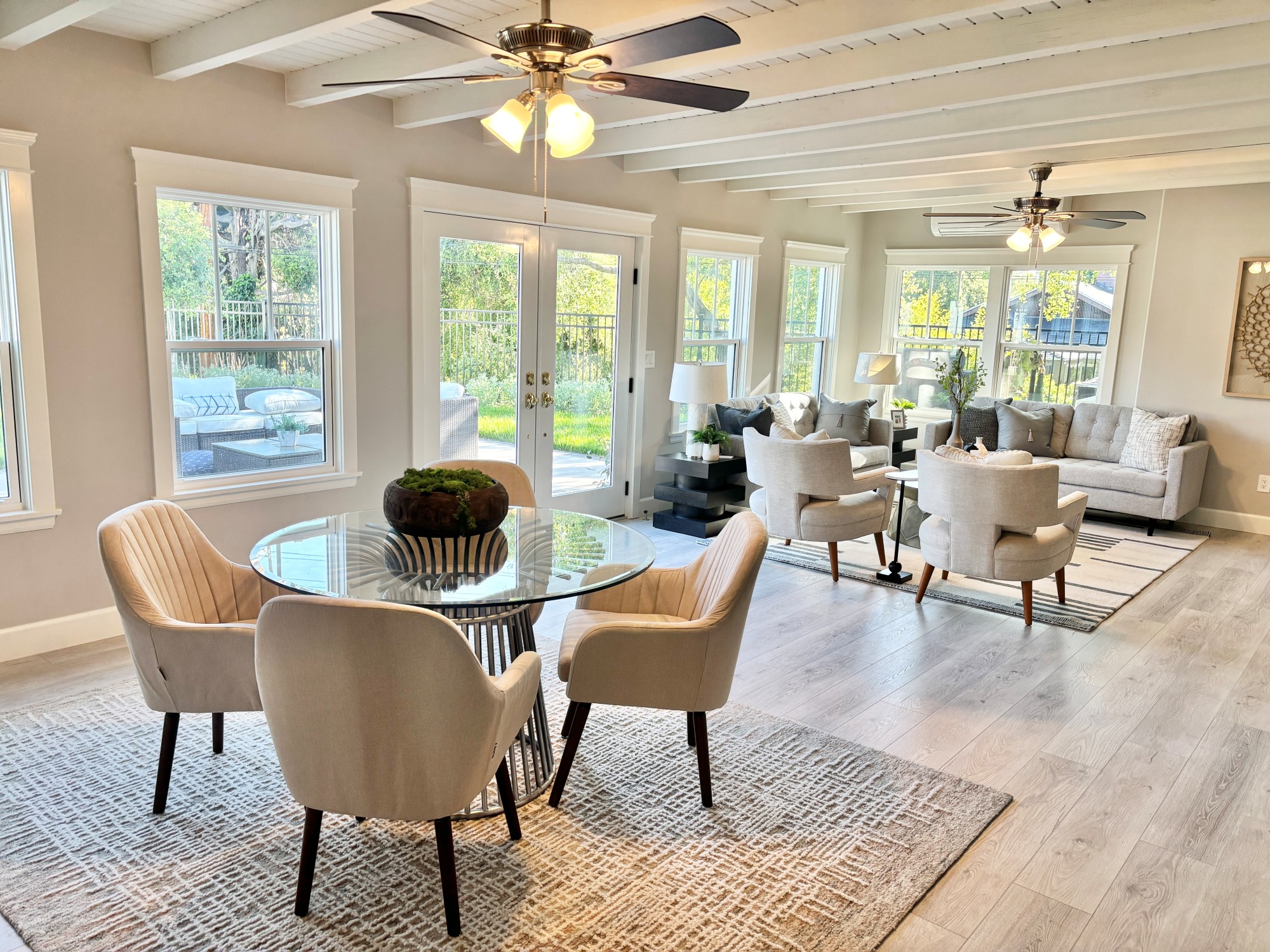
Most sellers think they need upgrades to raise perceived value, but buyers respond more strongly to how a room feels than what it’s made of. We use layout, vertical space, and proportion to make rooms feel luxurious, even when the materials are modest. A $500 dining table, placed with the right spacing, lighting, and flow, can feel like a custom build. Staging doesn’t change the house; it changes how buyers interpret it, and interpretation controls offers.
6. Time Kills Interest, and Staging Buys Urgency
A home that sits on the market loses value, no matter how beautiful it is or how fairly it’s priced. Staging compresses that danger by creating the emotional sense that someone else could want the house tomorrow. When the home feels finished, buyers fear missing out instead of fearing they’ll make a mistake. That shift changes pacing, tone, and urgency. Staging isn’t aesthetic, it’s sales velocity.
7. Bad Staging Makes People Uncomfortable, Even If They Can’t Say Why
Staging done wrong introduces hesitation through furniture that feels off, layouts that confuse, and colors that distract. At Bionki Interiors, we remove every visual speed bump that makes a buyer stop and second-guess what they’re seeing. Buyers can’t articulate flow, but they know when it’s missing. We build silent confidence into every corner so nothing breaks the emotional rhythm. That rhythm is what keeps them in the room and on the path to an offer.
8. We Hide Flaws and Frame Strengths in the Same Move
Every home has quirks, but not every home needs to broadcast them. We use staging to reroute the buyer’s focus toward strong architectural lines, natural light, and intuitive layout while downplaying narrow halls or awkward corners. A small bedroom feels cozy instead of cramped when it’s properly staged. We don’t lie, we redirect. That redirection is often the difference between “maybe” and “let’s write an offer.”
9. Good Staging Doesn’t Just Look Great, It Resolves Tension
Buyers come in with stress, questions, and hesitation, and every unresolved visual moment in your home adds to their indecision. We erase that tension by creating a sequence of emotional yeses. Each room should answer the question, “Does this feel right?” before it’s even asked. We’re not just styling spaces; we’re solving buyer psychology. When they stop questioning, they start moving, and movement leads to money.
10. The Offer Comes When They Stop Asking Questions
Buyers walk in with doubts. Where would the couch go? Is the dining area big enough? Will this feel too small? Great staging answers those questions visually, instantly, and confidently. When they stop questioning, they start deciding, and that’s when the offers come fast.
Your Price Isn’t the Problem, But Your Presentation Might Be
In Anaheim, the homes that sell fastest aren’t always the cheapest; they’re the ones that feel the most complete. At Bionki Interiors, we don’t decorate to impress; we design to convert. If your home is beautiful but sitting still, the problem may not be visibility; it may be presentation. Call (909) 706-5347 today and let us stage your listing with clarity, confidence, and market-winning emotional pull.